Customer: Viking Cruise Lines
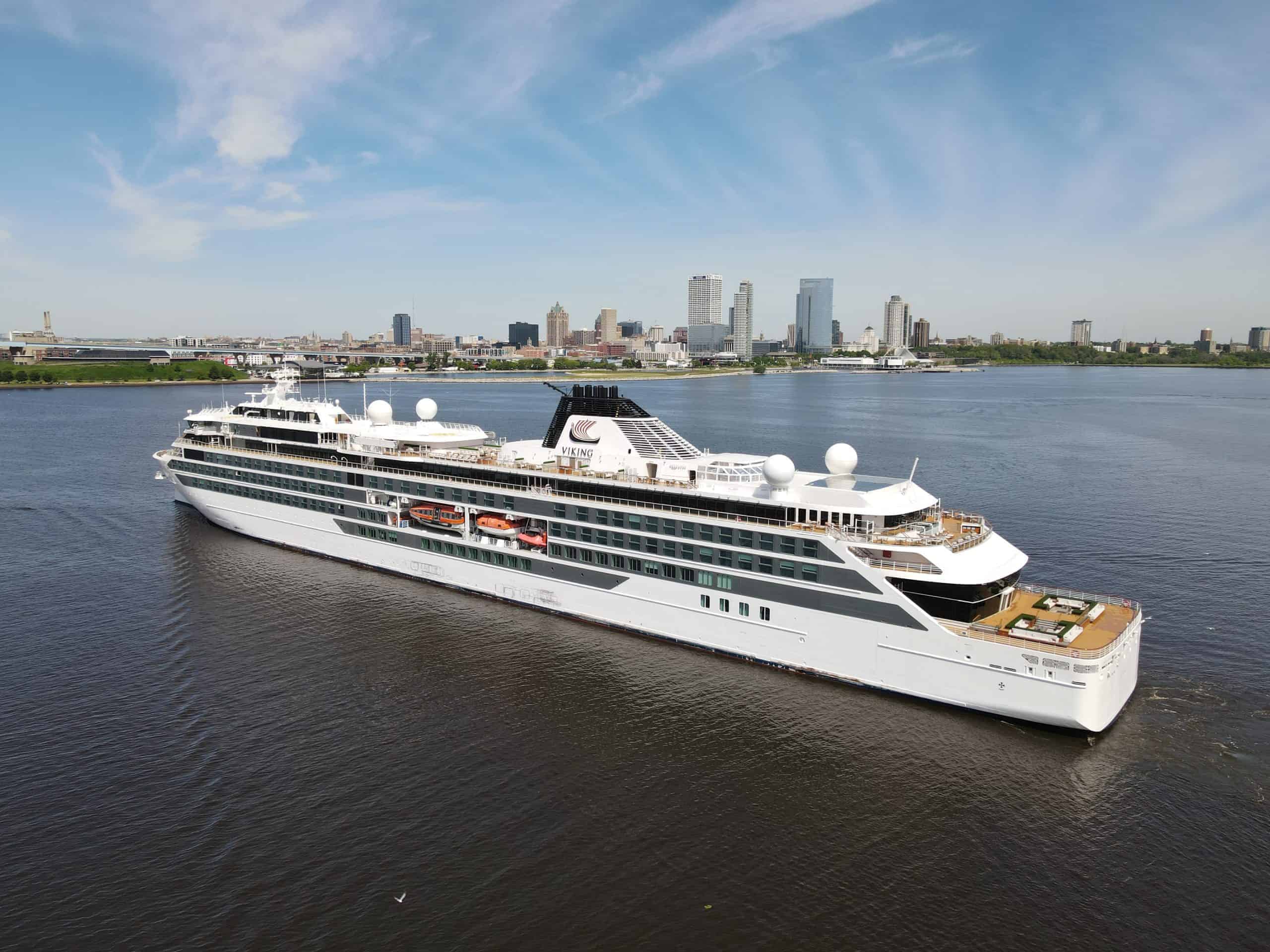
Viking is a leading international cruise line with a large, diversified portfolio of cruise ships. They provide a variety of ocean, river and expedition cruises in markets around the world. In 2022 Viking launched its Great Lakes cruise itineraries aboard its expedition cruise ship the Octantis and has steadily increased its itineraries and offerings in the years following. In 2023, the Octantis’s sister ship, the Polaris, was added to its portfolio of vessels hosting itineraries in the Great Lakes.
Viking stops in Milwaukee are predominantly turnaround visits, where cruise itineraries start and end at Port Milwaukee. While docked in Milwaukee, Viking relies on the various services offered at the Port to ensure their operational and logistics needs are met to their stringent requirements.

Location: Port Milwaukee
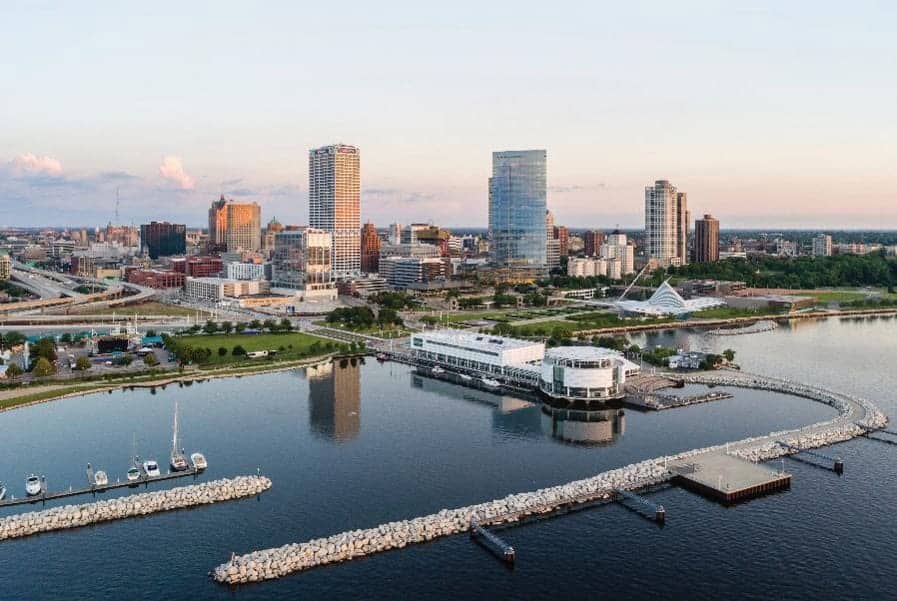
Port Milwaukee is located on the western shore of Lake Michigan with direct access to the Inland Waterway System and the St. Lawrence Seaway. Whether through the Seaway to the Atlantic Ocean or down the Mississippi River to the Gulf Coast, shippers can access global markets from the heart of North America via Port Milwaukee.
With the revitalization of Great Lakes cruising, Milwaukee has positioned itself as a premier turnaround port for Great Lakes cruise itineraries. Currently, six different cruise lines with 8 different vessels call on Port Milwaukee during the cruise season between April and October. Milwaukee’s attractiveness comes from both the cruise lines’ perspective and that of the cruise passengers themselves. The logistics needed to support vessel operations and maintenance while in port can vary from restocking essentials such as fuel, water and stores, to ship repair and maintenance. These resources are all available at Port Milwaukee and often leveraged by Viking and other cruise lines. From the passengers’ perspective, three dedicated cruise docks designed and positioned for an aesthetic and customized experience, to greetings from the City’s visitor bureau to tailored shore excursion offerings, cruise passengers feel welcomed and enjoy a first-class experience while visiting Milwaukee.
Project Staging and Preparation
A project team was identified. The team consisted of a crane operator, telehandler operator, operations personnel to support the effort, representatives from the product manufacturer, the vessel engineering team and a translator to handle translations between manufacturer representatives and the rest of the team.
Team assignments were made and a planning meeting set with the load team. Pre-planning with the load team was essential especially with the complex variables to the transload going from dock to vessel. The added complexity of using two pieces of equipment and proper weight balancing of the cargo to prevent hitting and damaging the vessel meant acute attention to detail and careful preplanning was essential. The team gathered and a detailed lifting plans was developed to include going through “what-if” scenarios.
The step-by-step lifting plan brought together clearly defined personnel roles, site conditions/challenges and strict safety measures to ensure the lift was executed safely. Precise weight calculations and crane capacities were thoroughly discussed. Calculating the total load was complex as it needed to include not only the cargo, but also all proper certified rigging, which included a spreader bar, chains, straps and shackles. The total load needed to fall within the cranes rated capacity to plan the radius and boom angle. Determining the center of gravity, selecting and inspecting all the proper gear were all elements considered to ensure the load remained stable throughout the lift. These safety measures were all required to help control the environment and ensure a successful and safe project execution.


The Challenge:
Complex, high-value cargo handling and transloading requiring multiple assets and specialized skills.
CASE STUDY
The Port’s Operations Team was called on to assist with the loading of a sensitive and expensive piece of equipment onto the Viking Octantis during a 2024 mid-summer turnaround visit.
This particular load was challenging on multiple fronts.
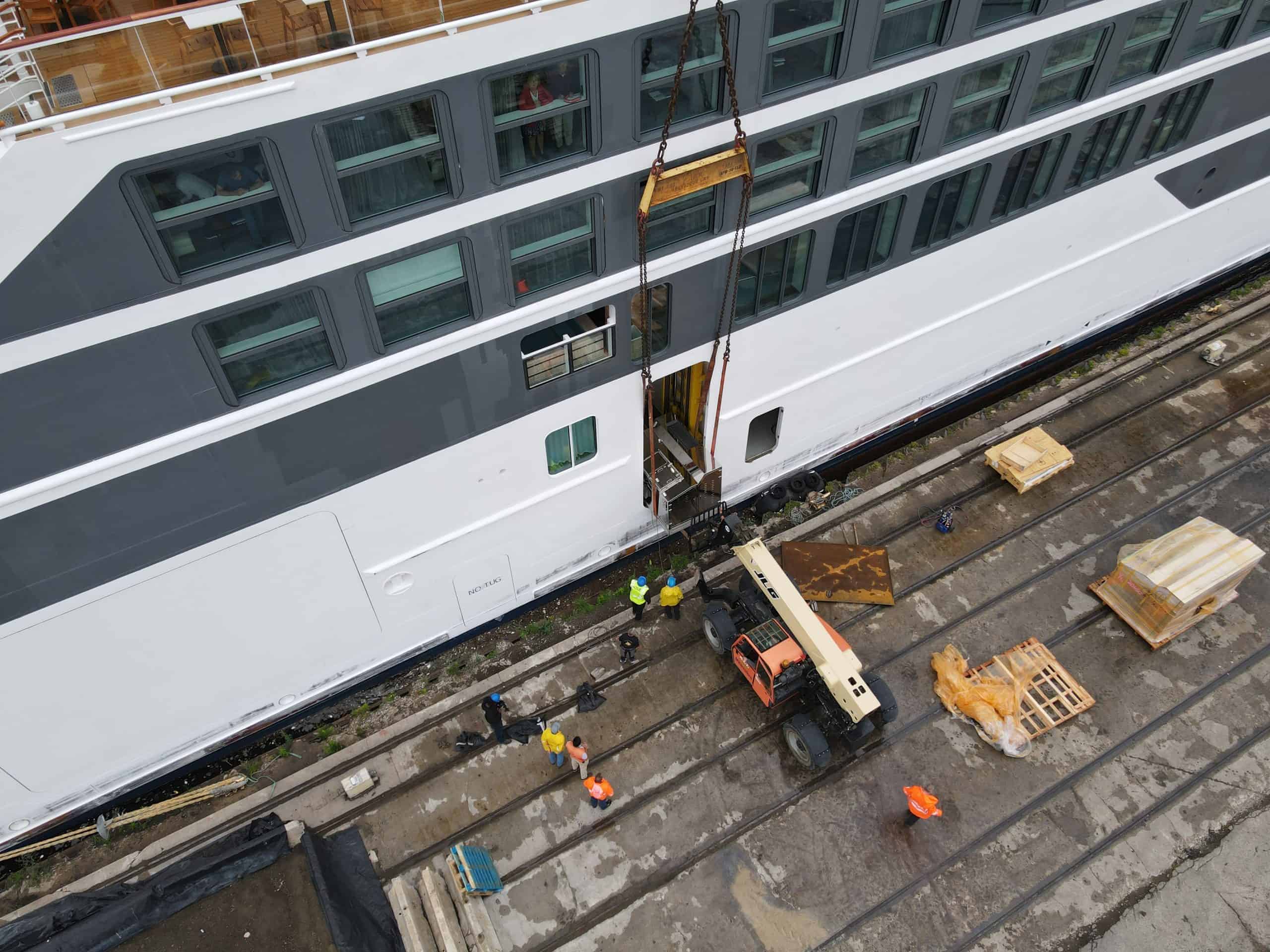
- The entry point for the load was extremely tight with only 3 centimeters of space on each side requiring delicate movement of the cargo
- The load location site was directly adjacent to windows on the vessel requiring precise positioning
- The operation necessitated the use and coordination of two pieces of equipment, a crane, as well as a telehandler
- The weight of the piece of equipment needed to be accurately balanced while moved with the telehandler to prevent swaying and potentially hitting a nearby window on the ship
- The cargo was a high-value piece of equipment that required safe, damage-free loading
The Solution:
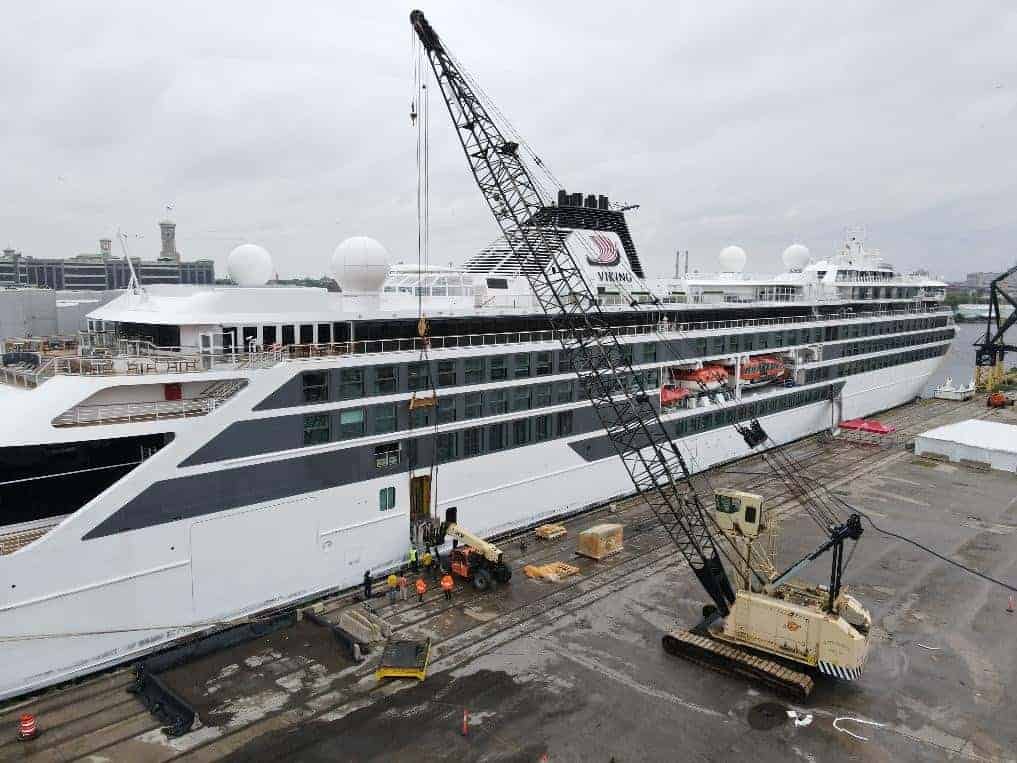
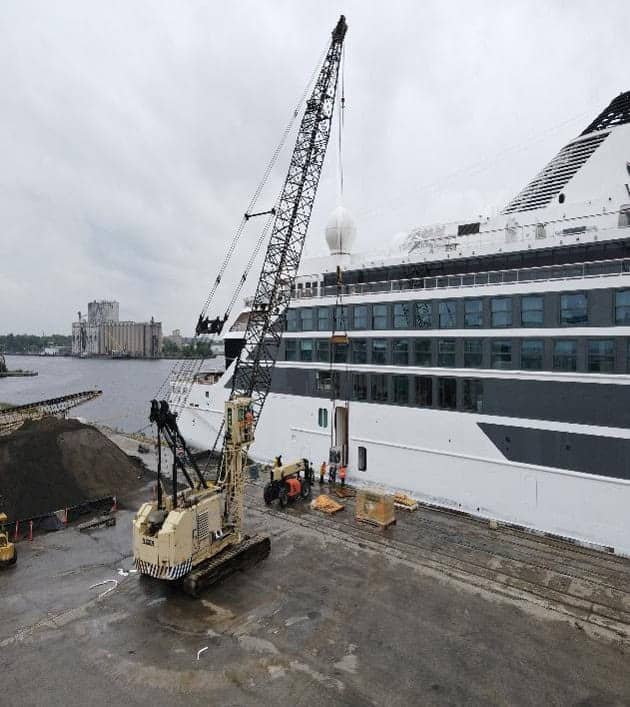
The piece of equipment was delivered to the Port via truck and offloaded dockside near the vessel. The Port’s 52,000 lb. Kalmar forklift was used to offload the commodity from the truck to the dock after which time the cargo was inspected and the specifications documented. Once the specifications were reviewed, the required sizing of the rigging, shackles, rings and spreader bar were identified. The appropriate rigging was precured and inspected and it was determined that the Port’s Manitowoc 4100 would be used to execute the lift.
The lift consisted of a three-step process following the procurement and inspection of the rigging equipment.
Step 1: Leverage the Port’s Manitowoc crane to execute the lift. The assigned team lifted the equipment with the crane and placed it partially in the doorway entrance of the vessel.
Step 2: Disconnect the Manitowoc crane. This was done in order to maintain proper rigging distance from the vessel’s exterior and prevent any breakage of the ship’s windows.
Step 3: Employ the JLG telehandler to lift and push the cargo to fully load onto the vessel.
Vessels and Terminal Assets:
Vessel: Viking Octantis
Equipment employed for the project:
- 52,000 lb. Kalmar forklift
- Port’s Manitowoc 4100 crane
- JLG telehandler